
The New ESG Divide: Why Capital Flows Faster Than Credible Transition Narratives
Capital is accelerating into transition. Credibility is forming more slowly.
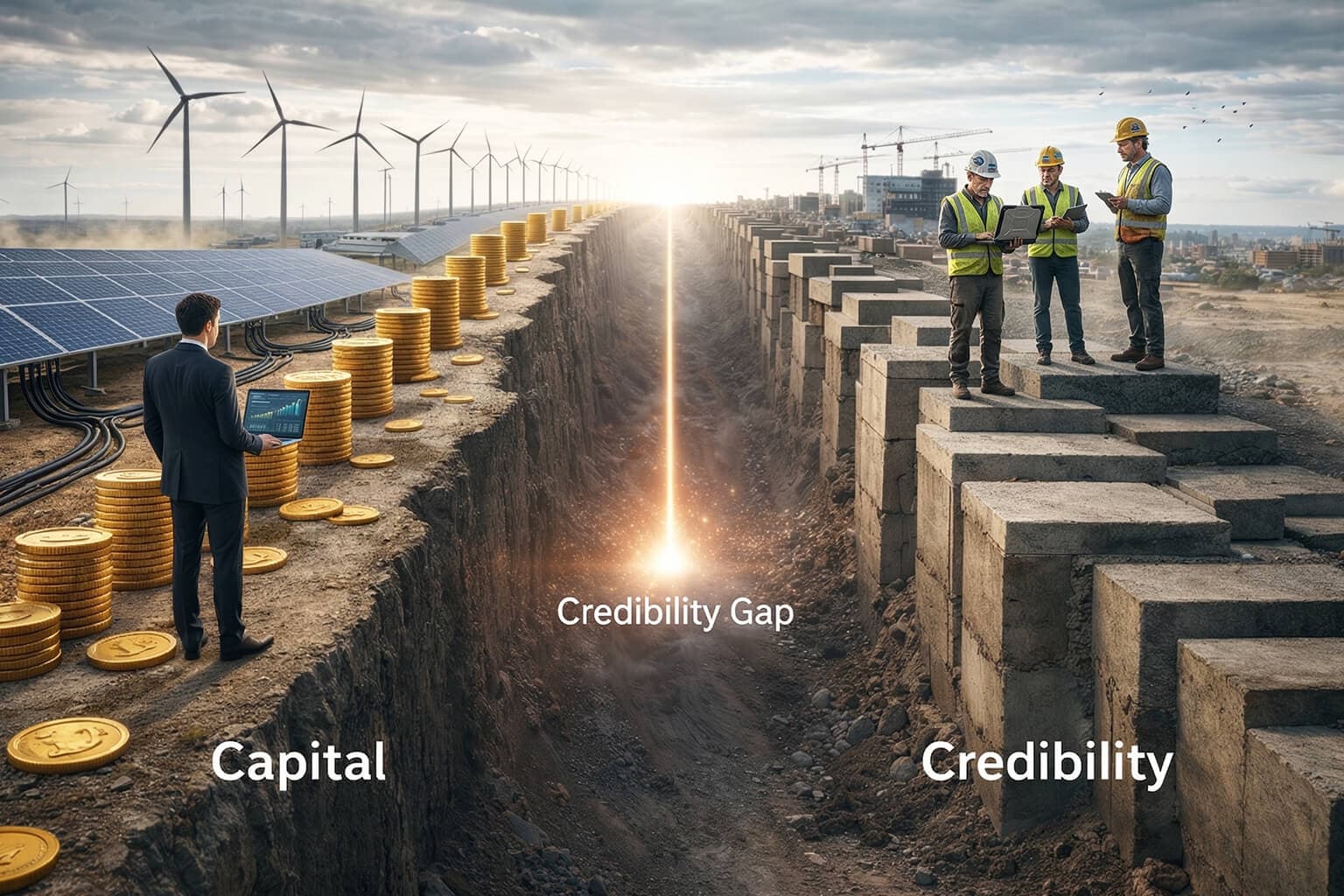
Clean Energy Investment (2023)
Global investment into clean energy has scaled rapidly, approaching $2 trillion annually.
Execution-Ready Transition Plans
Less than 40% of companies with net-zero commitments have clear, near-term execution pathways.
Most organizations assume that capital allocation signals progress. In practice, it signals direction, not credibility.
Over the last two years, investment into energy transition has accelerated sharply. Capital is moving into renewables, storage, electrification and grid systems at scale. Funding is no longer the primary constraint.
What remains uneven is how this capital translates into credible transition pathways.
This gap is not immediately visible. It builds gradually across signals.
Commitments expand. Investments follow. But the linkage between the two often remains unclear.
Markets do not evaluate capital in isolation. They assess whether it aligns with execution clarity, regulatory positioning and measurable progress. When these signals are not coherent, interpretation begins to shift.
None of these signals are definitive on their own. Together, they indicate divergence.
Early Stage
Commitment Expansion Net-zero targets and sustainability positioning scale rapidly. Messaging remains close to original intent.
Mid Stage
Capital Acceleration Investment flows increase across transition sectors. Early questions emerge around execution clarity.
Late Stage
Credibility Scrutiny Investors and regulators begin evaluating gaps between commitments, disclosures and delivery.
Final Stage
Market Repositioning Perception stabilises around companies with clear, verifiable transition pathways. Others face increasing scrutiny.
What appears as a transition internally is interpreted differently across external systems.
Investors look for measurable progress tied to capital deployment.
Regulators assess alignment with evolving disclosure frameworks.
Industry participants interpret competitive positioning.
Media and digital ecosystems amplify signals that are most visible, not necessarily most complete.
Each system processes the same information differently.
Individually, these shifts appear manageable. Collectively, they create distance between what is being done and how it is understood.
Organizations often respond by increasing communication. More disclosures, more announcements, more articulation. Yet volume rarely resolves this gap. In many cases, it introduces further variation into how the transition story is interpreted.
What changes the trajectory is not frequency, but alignment.
In situations where this gap narrows, capital, policy positioning and narrative begin to reinforce each other. Transition pathways are not only defined, but made legible across systems. Disclosures, stakeholder engagement and market signalling start to converge.
Not by expanding the story.
But by structuring how it is interpreted.
Because in transition markets, outcomes are shaped across multiple environments at once.
And once interpretation diverges across these, it rarely recentres on its own.
Sources
- International Energy Agency — World Energy Investment Report (2024)
- BloombergNEF — Energy Transition Investment Trends (2024)
- PwC — Net Zero Economy Index (2024)
Popular Insights
The Gap Between What Companies Say And What Markets Hear





News & Announcements

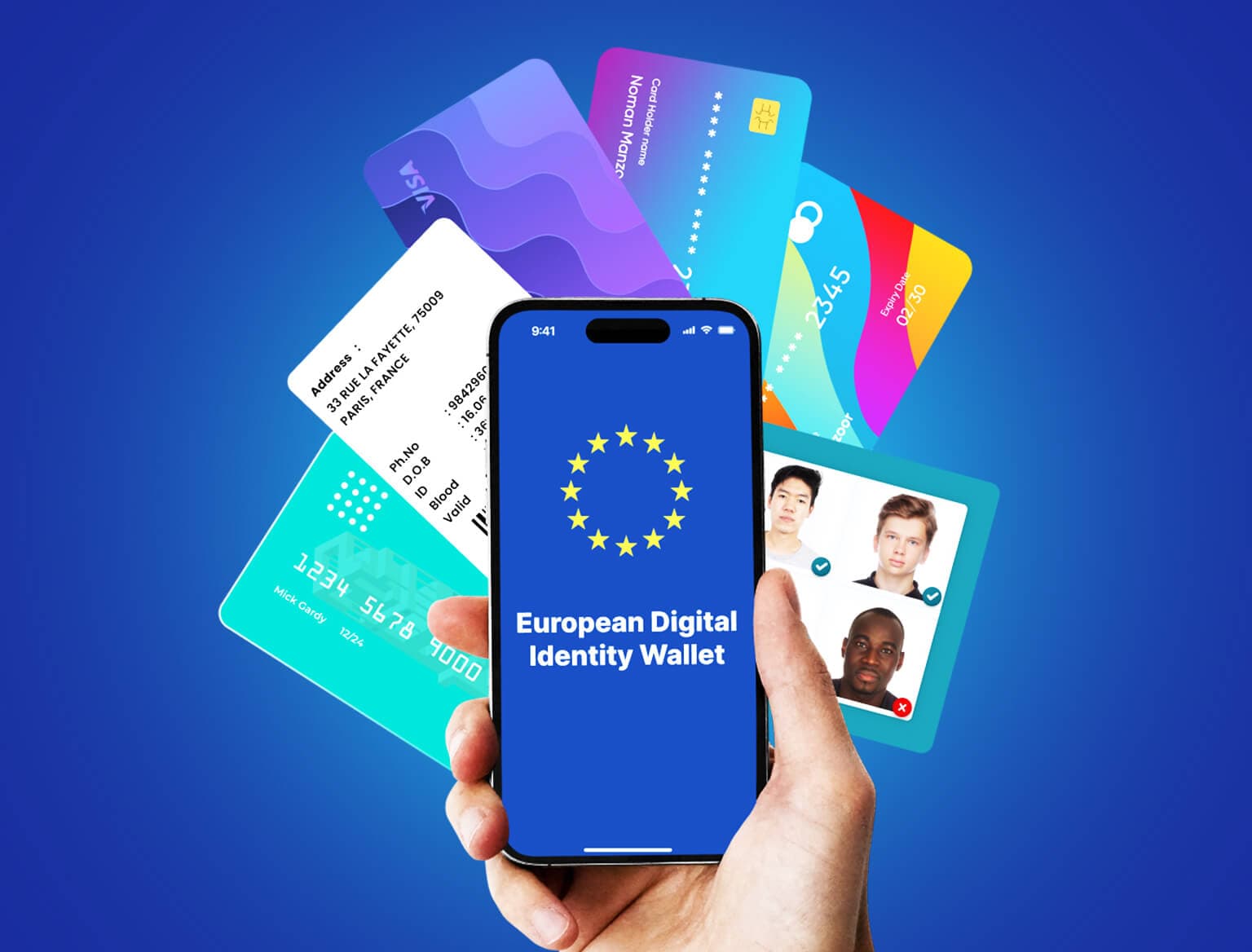

What The ECB’s Latest Digital Euro Push Could Mean For Trust And Stakeholder Confidence In Payments

Global Success Stories

Strategic Advocacy Outlook 2026
Strategic Influence, Institutional Trust and the Future of Advocacy

Asia Semiconductor Narrative 2026
Navigating Geopolitical Tensions in the Global Supply Chain

Operating in Real-Time Feedback Loops
The Evolution of Information Integrity and Open Influence Ecosystems
Strategic Advocacy Outlook 2026
Strategic Influence, Institutional Trust and the Future of Advocacy
Asia Semiconductor Narrative 2026
Navigating Geopolitical Tensions in the Global Supply Chain
Operating in Real-Time Feedback Loops
The Evolution of Information Integrity and Open Influence Ecosystems
Explore Industries

Energy, Resources & Circular Economy
Operating at the intersection of policy, capital and public scrutiny, where perception shapes access, alignment and long-term positioning.

Financial Services
Operating at the intersection of regulation, market perception and institutional trust, where capital flows are influenced as much by narrative interpretation as by financial performance.

Consumer & Digital Economy
Operating within fast-moving environments where perception, behaviour and platform dynamics directly influence growth, trust and regulatory response.

Defense & Strategic Industries
Operating within high-sensitivity environments where perception, compliance and institutional alignment determine long-term positioning and access.

Healthcare & Life Sciences
Operating across clinical complexity, regulatory oversight and public perception, where interpretation influences adoption, trust and treatment pathways.
Infrastructure & Transport
Operating across long-cycle investments, regulatory oversight and public acceptance, where project viability is shaped by multi-stakeholder interpretation.

Public Sector & Sovereign Institutions
Operating in environments where policy, perception and stakeholder interpretation directly influence national positioning, institutional credibility and international engagement.

Technology, Media & Platforms
Operating at the intersection of scale, regulation and public perception, where platform decisions, content ecosystems and policy scrutiny shape long-term positioning and market access.