
AI Regulation Is Fragmenting Global Markets Faster Than Companies Can Adapt
AI is scaling globally, but regulation is evolving along different paths.

Active AI Policy Development
More than 70 countries are developing or implementing AI regulatory frameworks.
US | EU | China
Global AI governance is consolidating into three fundamentally different approaches.
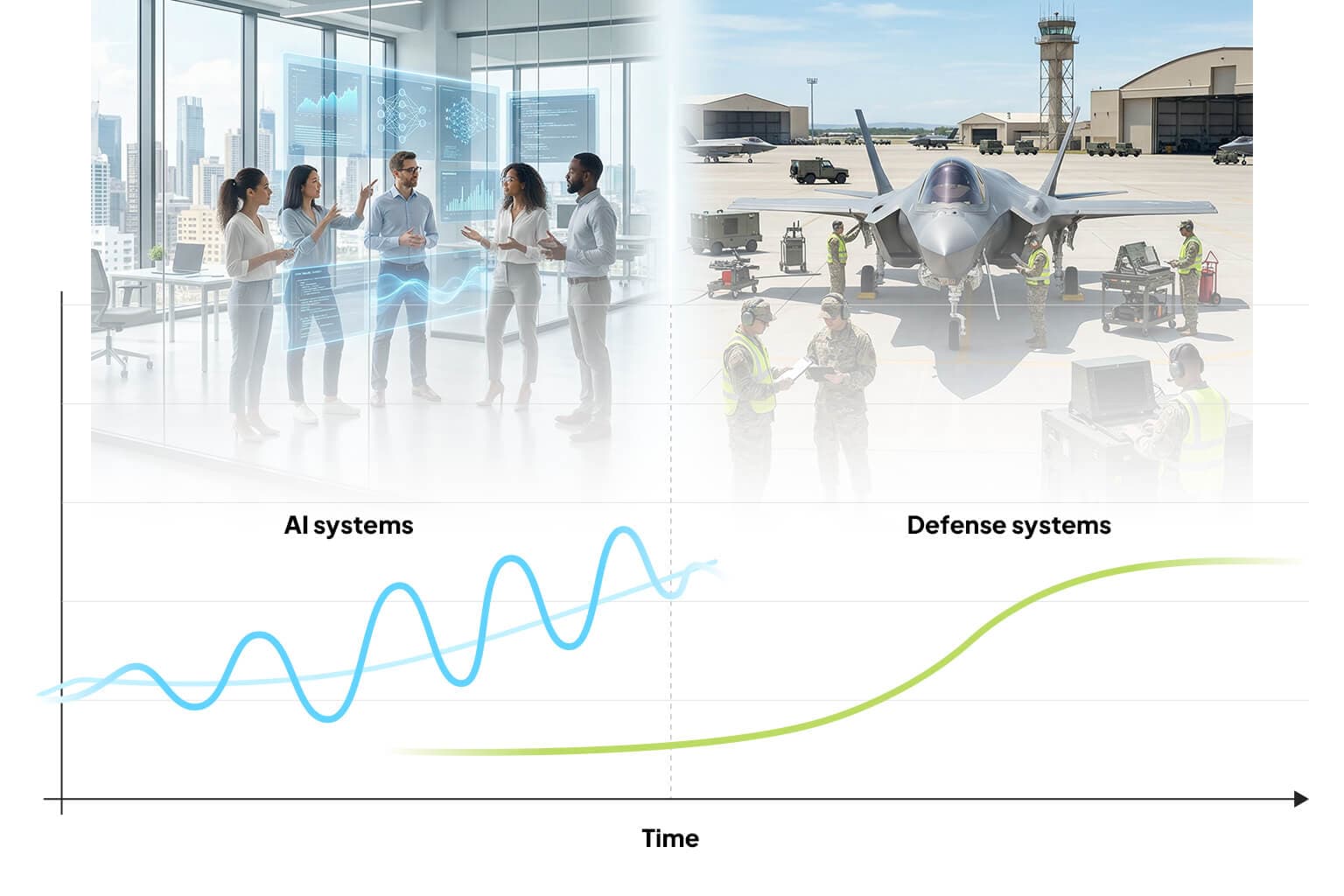
For a period, AI adoption expanded across markets without significant structural constraints. Models were deployed across regions, platforms scaled globally, and capabilities were assessed primarily on performance and access. Regulatory frameworks existed, but they largely followed the pace of innovation.
Over the last two years, this dynamic has shifted. Governments have begun defining AI independently, not as a uniform technological category, but as a domain linked to economic competitiveness, national security, and societal risk. As a result, distinct regulatory approaches have emerged across major markets.
The European Union has introduced a structured, risk-based framework through the AI Act, classifying systems based on their level of impact. The United States continues to evolve oversight through a combination of executive direction and sector-specific regulation. China has embedded AI governance within a state-led model, with a focus on algorithm registration, content control, and platform accountability.
These systems are internally consistent, but they are not aligned with each other.
Companies are increasingly required to operate across multiple regulatory environments that differ not only in requirements, but also in how AI is defined, deployed, and governed.
Early Stage
Unified Expansion AI systems scale across markets with limited regulatory differentiation.
Mid Stage
Policy Formation Governments introduce frameworks reflecting local priorities and risk definitions.
Late Stage
Regulatory Divergence Distinct governance models begin to take shape across major regions.
Final Stage
Operational Realignment Companies adapt products, deployment models, and market strategies to align with regional requirements.
Regulation is no longer operating as a background constraint. It is actively shaping how AI is understood within each market.
Investors assess exposure to regulatory risk alongside technological capability.
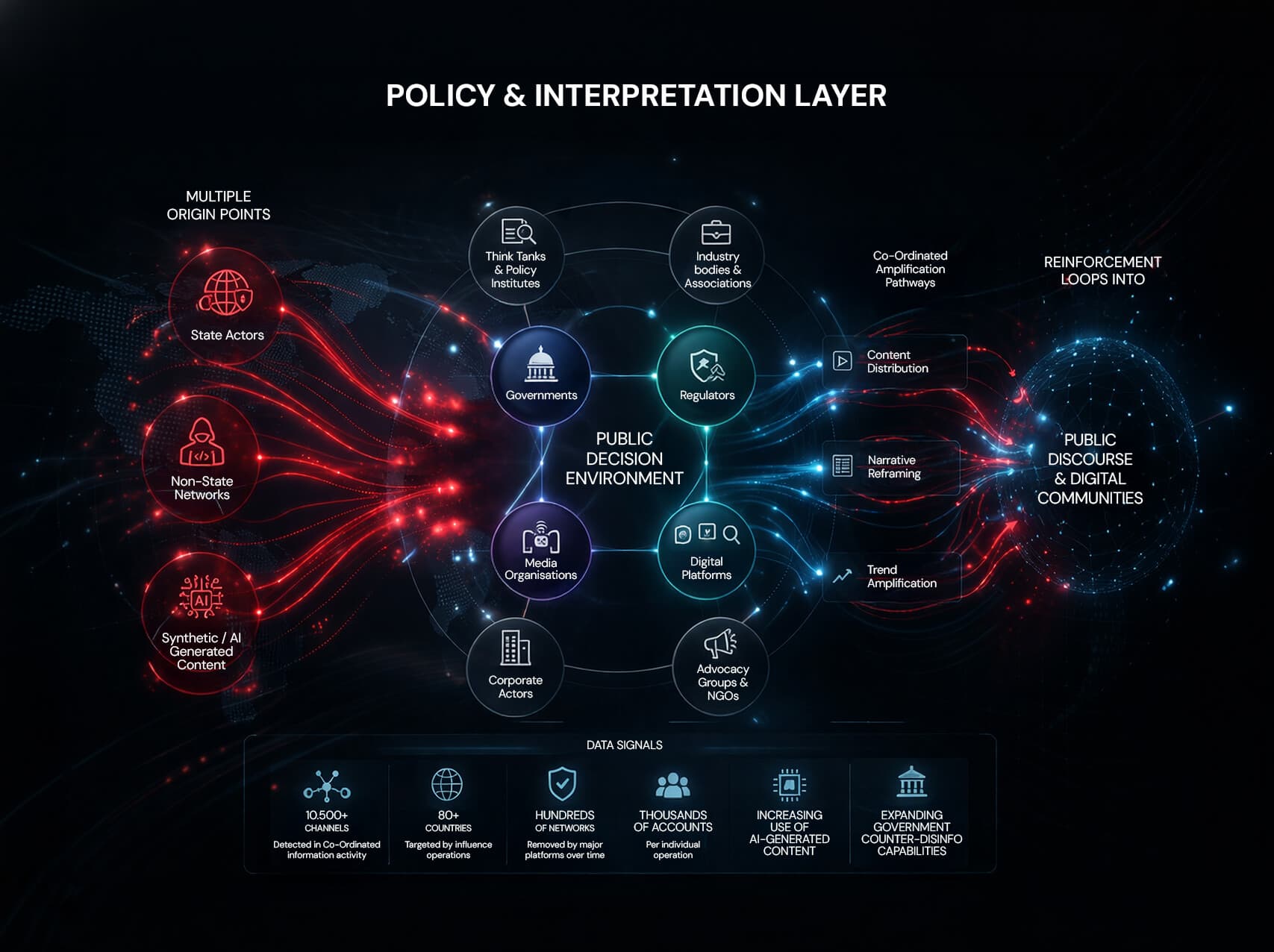
Governments position AI within broader economic and security strategies. Industry participants adjust based on where they can operate with fewer constraints. Media and policy discourse shape public understanding, often emphasizing different aspects such as innovation, control, or risk.
As these interpretations evolve, the same AI capability can carry different implications across markets.
Organizations often respond by adapting to each framework independently. Over time, this creates variation in how the company is positioned across regions. Differences in compliance, disclosure, and engagement begin to influence how stakeholders interpret the organization’s approach to AI.
What appears as regulatory adaptation internally becomes a question of consistency externally.
In environments where multiple regulatory systems intersect, alignment across these interpretations becomes as relevant as compliance itself.
Sources
- OECD — AI Policy Observatory (2024)
- European Commission — EU AI Act (2024)
- White House — Executive Order on AI (2023)
- Stanford University — AI Index Report (2024)
Popular Insights
The Gap Between What Companies Say And What Markets Hear





News & Announcements



What The ECB’s Latest Digital Euro Push Could Mean For Trust And Stakeholder Confidence In Payments




Global Success Stories

Strategic Advocacy Outlook 2026
Strategic Influence, Institutional Trust and the Future of Advocacy

Asia Semiconductor Narrative 2026
Navigating Geopolitical Tensions in the Global Supply Chain

Operating in Real-Time Feedback Loops
The Evolution of Information Integrity and Open Influence Ecosystems
Strategic Advocacy Outlook 2026
Strategic Influence, Institutional Trust and the Future of Advocacy
Asia Semiconductor Narrative 2026
Navigating Geopolitical Tensions in the Global Supply Chain
Operating in Real-Time Feedback Loops
The Evolution of Information Integrity and Open Influence Ecosystems
Explore Industries

Energy, Resources & Circular Economy
Operating at the intersection of policy, capital and public scrutiny, where perception shapes access, alignment and long-term positioning.

Financial Services
Operating at the intersection of regulation, market perception and institutional trust, where capital flows are influenced as much by narrative interpretation as by financial performance.

Consumer & Digital Economy
Operating within fast-moving environments where perception, behaviour and platform dynamics directly influence growth, trust and regulatory response.

Defense & Strategic Industries
Operating within high-sensitivity environments where perception, compliance and institutional alignment determine long-term positioning and access.

Healthcare & Life Sciences
Operating across clinical complexity, regulatory oversight and public perception, where interpretation influences adoption, trust and treatment pathways.
Infrastructure & Transport
Operating across long-cycle investments, regulatory oversight and public acceptance, where project viability is shaped by multi-stakeholder interpretation.

Public Sector & Sovereign Institutions
Operating in environments where policy, perception and stakeholder interpretation directly influence national positioning, institutional credibility and international engagement.

Technology, Media & Platforms
Operating at the intersection of scale, regulation and public perception, where platform decisions, content ecosystems and policy scrutiny shape long-term positioning and market access.